Suppliers of automotive components are part of a supply chain, in which quality, punctuality and consistency of products is crucial. Even a tiny defect in a component can have implications for the final vehicle assembly, customer satisfaction and, ultimately, the safety of the product. Car manufacturers require a quality management system that manages risk, controls production and reduces defects.
IATF 16949:2016 is an international quality management system standard for the automotive industry. It is based on the ISO 9001:2015 quality management system standard, with additional automotive-specific requirements. Any manufacturer working with an IATF 16949 consultant in Ahmedabad will be aware of these demands and can ready their quality management system for the transition and eventual implementation.
IATF 16949 is for organisations which manufacture in the automotive sector, and any relevant service parts. This covers companies that produce: Metal components, plastic moulded parts, rubber parts, castings, forgings, machining parts and electrical assemblies.
Manufacturers of automobiles frequently provide OEMs or the customer within the supply chain quality-system needs. Suppliers are sometimes required to show that they are able to product specifications, deliver (with specific dates or geographic locations) and meet customer needs.
A knowledgeable IATF 16949 consultant at Ahmedabad can assist you in figuring out if the standard is applicable, analyze customer expectations and recognize the requirements that pertain to your manufacturing operations.
Manufacturers need to define their business and manufacturing processes, their interdependences and controls to ensure consistent output. This includes identifying responsibilities, measuring process performance and managing product quality risks.
All documents: process flow diagrams, PFMEA and control plans should be integrated. This allows for detection of potential failures and their effects, and determining appropriate controls at the time of manufacture. These documents must accurately mirror manufacturing operations and should be reviewed when processes change.
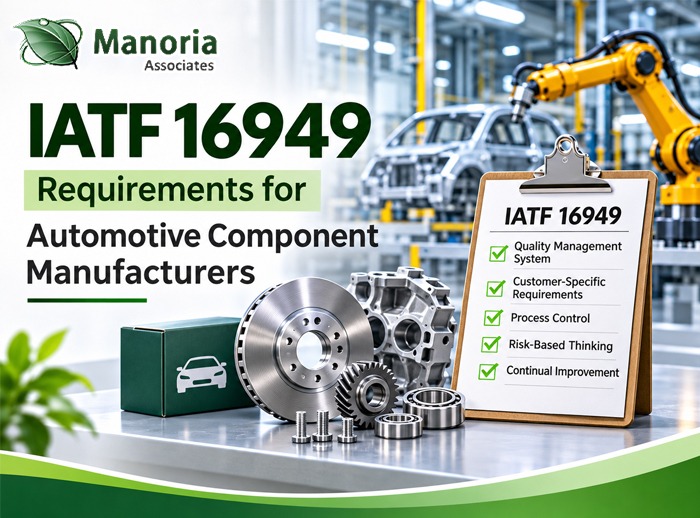
Automotive Core Tools assist automotive manufacturers in how to plan manufacturing, use for prevention of product defects and quality control. The five tools shown below are (ten are listed at Automotive Core Tools):
The manufacturing team will need a trained IATF 16949 consultant in Ahmedabad to guide them about these measures and implement them in the production process rather than reporting measures just for an audit.
Suppliers: New automotive businesses rely on suppliers to provide raw materials, parts and outsourced processes. Automotive companies need to put in place appropriate systems for supplier selection, evaluation, monitoring and development.
Customer-specific requirements matter as well OEMs might have further requirements about product approval, packing, traceability, reporting, delivery and correction actions. Manufacturers should make sure to gather requirements for each customer and inform responsible departments.
Production shall be carried out in accordance with the validated processes, approved production procedures and work instructions and the specified inspection instructions. Equipment, tools and materials shall be properly controlled.
How the products are linked to production, material and inspection records (if applicable) can be managed via traceability arrangements. The product safety requirements also need to be established and controlled by assigning responsibilities, controls and procedures. Contingency plans are developed to ensure businesses can respond to events that impact production or delivery to customers.
Internal audits assist manufacturers in assessing the suitability of their quality management system and manufacturing processes. Product and manufacturing process audits should be scheduled based on applicable requirements and risks.
When problems or customer complaints happen they should have a process to determine the root cause, control the products involved and to take corrective action. They should also check that the corrective action is successful and determine whether the same problems could occur in other processes.
The process typically starts with a gap analysis of the existing quality management system. The organization evaluates its processes, customer requirements, documentation, employee capabilities and production controls.
The next phase is the creation or revision of procedures, process flow diagrams, FMEAs, control plans and associated documentation. Employees are trained, and the system is rolled out within the affected areas.
Internal audits and management reviews are used to determine the performance of the system, and what issues, gaps, and other problems need to be addressed, before the external certification audit.
An IATF 16949 consultant in Ahmedabad supports documentation, Core Tools implementation, training of employees, gap assessment, internal audits and preparation for corrective action. The certification is provided by the IATF recognized certification body of the organisation after the latter passes the said conformity.
Choosing a consultancy partner is paramount as effective implementation goes well beyond document creation. Prior to hiring an IATF 16949 consultant in Ahmedabad, to enquire how they plan to evaluate the automotive manufacturing processes, Core tools, customer specific demands & employees training.
Find out what implementation support is provided and what documents will be produced, how internal audit readiness will be measured and how they support you in preparing for corrective-action plans. Do not settle for providers who guarantee certification; the decision is ultimately yours and you will be measured independently.
Manoria Associates offers management-system consultancy assistance for organizations getting ready to meet the IATF 16949 requirements. Visit the IATF 16949 consultancy service for your organization for more information.
An effective quality management system for automotive manufacturers ensures that process control is enhanced, production risks are managed, traceability is improved and customer requirements are fully satisfied. The system becomes integrated into the manufacturing daily life, rather than just a matter of filing docs for certification purposes.
Do you want to get ready for your automotive component business to implement customer requirements? Consult with an IATF 16949 consultant in Ahmedabad to review your current quality system, document needs and implementation priorities. Professional support can assist your team in creating an actionable plan and preparing for certification.